


The Anatomy of a Nostalgia Bomb: Why Heinz’s Glass Bottle Is a Masterclass in Emotional Engineering
Heinz’s CMO Todd Kaplan said the quiet part out loud. Plastic is more practical. The squeeze bottle does the job faster, cleaner, with less mess on your shirt. And yet, when Heinz decided to celebrate its 157th anniversary, it didn’t engineer a better nozzle or redesign the label. It reached backward — to a container that is objectively worse at dispensing ketchup — and turned that functional inferiority into the entire selling proposition. If you’re a performance marketer still treating nostalgia as a mood board aesthetic, this is your wake-up call. What Heinz actually built was a conversion architecture disguised as a birthday party.
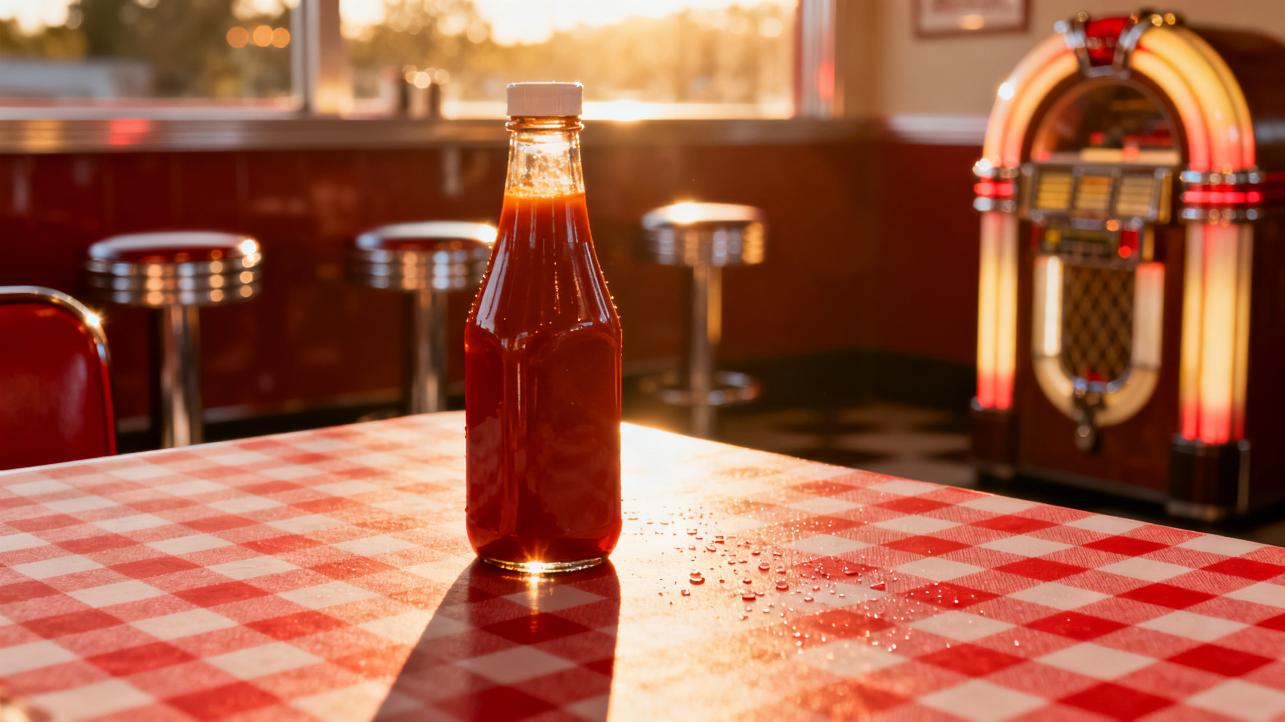
Start with the sensory layer. Kaplan told Adweek that modern bottles “can’t recreate the distinct experience of glass — the weight in your hand, the familiar look on the table, and the ritual of tapping the iconic ’57’ sweet spot to get the perfect pour.” That’s not brand poetry. That’s a deliberate inventory of sensory memory triggers: tactile weight, visual familiarity, and a participatory ritual — the “57 trick” — that requires the consumer to physically interact with the product in a way that plastic never demands. Each of these cues fires a specific pathway in the brain that links present experience to encoded memory. The friction isn’t a bug. It’s the mechanism.

Then there’s the cultural anchor. This isn’t just any glass bottle. It’s the eight-sided, 14-ounce classic drawn by Andy Warhol and added to the Smithsonian’s collection. Heinz didn’t need to explain why the bottle matters — American pop culture already did that work decades ago. Diner countertops, Warhol screen prints, museum pedestals: these reference points elevate a condiment container into a cultural artifact, which means the purchase becomes an act of identity rather than consumption. You’re not buying ketchup. You’re buying membership in a shared American memory.
Layer three is manufactured scarcity. The limited run at Walmart, priced at $14.99 and available only “while supplies last,” introduces urgency without screaming about it. Scarcity reframes a commodity — something literally available in every grocery aisle — as a collectible. For performance marketers, this is the mechanic that compresses the decision window and justifies a premium. Emotional resonance gets people to the page; scarcity gets them to the checkout.
Finally, generational belonging. The accompanying film “Life of a Bottle,” scored to Willie Nelson’s rendition of “All of Me,” doesn’t target a demographic. It targets a feeling — the communal warmth of a diner booth, of passing a bottle hand to hand from breakfast through dinner. It invites viewers to self-select into a tribe of people who remember, or who wish they could.
Here’s the lesson for native advertising specifically: this four-part structure — sensory cue, cultural anchor, scarcity signal, identity reinforcement — mirrors the reason native ads outperform display by seamlessly combining with the fabric of the content experience rather than interrupting it. Display advertising optimizes for efficiency. Native, like Heinz’s glass bottle, optimizes for a moment of feeling. It works because it creates emotional friction — a pause, a recognition, a flicker of something personal — inside a feed the user is already trusting.
Nostalgia isn’t a vibe you sprinkle on creative. It’s a structured framework with identifiable, testable components. Heinz just happened to pour it into a glass bottle. Performance marketers can pour it into a headline, a thumbnail, and a landing page — if they understand the engineering underneath.
Nostalgia Surges Create Native Ad Gold Rushes — If You Spot Them in Time
When Heinz detonated its glass bottle nostalgia bomb, the blast radius extended far beyond its own campaign. The announcement rippled across billboards, social media, and retail activations, as Adweek documented, sparking a broad cultural conversation about heritage, authenticity, and the visceral comfort of things that feel like they used to. But here’s what most brand marketers miss: that conversation doesn’t stay contained to one company’s earned media. It seeps into the paid advertising ecosystem within days, creating a downstream gold rush that performance marketers can exploit — if they’re watching.
The pattern is remarkably consistent. A legacy brand triggers a nostalgia moment, and within 48 to 72 hours, competitor brands begin launching responsive creatives. Artisanal food companies start running ads with phrases like “the original recipe” and “made the way your grandmother remembers.” Affiliate marketers spin up advertorials with headlines anchored in sensory memory — the weight of glass in your hand, the satisfying pop of a metal cap. Entire product categories, from condiments to cookware to heritage clothing, see a temporary spike in emotionally framed native ad inventory. The nostalgia wave doesn’t just lift one boat. It lifts the entire harbor.
This is where the structural advantage of native advertising becomes critical. Unlike display banners that users have learned to mentally block out, native ads take root in the consciousness of potential customers by blending seamlessly into the editorial environment around them. When the cultural mood is already tilted toward nostalgia — when people are actively sharing memories of glass ketchup bottles on their dinner tables — a native ad framed with heritage imagery and warm, retrospective copy doesn’t feel like advertising. It feels like a continuation of the conversation they’re already having. That contextual blending is precisely what makes nostalgia surges so potent for native campaigns: the emotional priming has already been done for you by the culture at large.
The challenge, of course, is timing. The window for capturing outsized click-through rates on nostalgia-angled creatives is typically two to six weeks before the pattern saturates and audience fatigue sets in. This is where a tool like Anstrex Native becomes indispensable. By filtering native ad networks for keyword clusters — “classic,” “original,” “the way it used to be,” “bring back” — you can detect in real time when competitors and affiliates start flooding inventory with heritage-themed creatives. You can track format shifts: the sudden appearance of retro color palettes, sepia-toned imagery, serif typography, and sensory-focused headlines that emphasize taste, texture, and memory. You can identify which advertisers are already capitalizing on the wave, study their landing pages, and reverse-engineer what’s working before committing your own budget.
The real advantage here isn’t copying Heinz. You don’t need a 157-year-old brand to play this game. What you need is the recognition that when a major brand detonates a nostalgia bomb, it temporarily lowers the emotional resistance of entire audience segments to heritage-framed messaging. Research cited by Basis Technologies shows that native ads already generate an 18% higher lift in purchase intent compared to banner ads under normal conditions. Layer a culturally primed nostalgia moment on top of that inherent advantage, and you have a compounding effect — audiences who are not just receptive but actively seeking content that validates the warm feeling they’re already experiencing.
The marketers who move first during these windows capture disproportionate returns. The ones who wait until every affiliate network is drowning in “remember when” headlines are buying at the top. Anstrex Native gives you the surveillance layer to know the difference — to see the first tremors of a nostalgia surge before it becomes an earthquake, and to position your creatives at the leading edge rather than the trailing one.
The Four Nostalgia Frameworks That Actually Convert in Native Ads
Heinz didn’t stumble into nostalgia by accident. The glass bottle campaign is a masterclass in emotional architecture — every element engineered to trigger memory, desire, and action in sequence. Strip away the brand specifics and you’re left with four replicable frameworks that performance marketers can deploy across verticals, whether you’re selling supplements, SaaS subscriptions, or kitchen appliances.
Framework 1: The Ritual Resurrection
Heinz didn’t just bring back a bottle. It brought back a behavior. As CMO Todd Kaplan explained to Adweek, the glass bottle’s power lies in “the ritual of tapping the iconic ’57’ sweet spot to get the perfect pour.” That’s the framework: identify a physical or behavioral ritual your audience associates with a simpler time, then build your native ad creative around resurrecting it. A cookware brand doesn’t lead with non-stick coating specs — it leads with “Remember when your grandmother seasoned her cast iron after every meal?” The ritual becomes the hook. The product becomes the vehicle for reliving it. In native ad headlines, this translates to pattern-interrupt copy like “The Kitchen Habit Your Mom Swore By Is Making a Comeback” — the kind of language that, as Brax notes, turns browsers into buyers by tapping emotional undercurrents rather than rational feature lists.
Framework 2: The Deliberate Downgrade
This is the most counterintuitive move in the Heinz playbook: celebrating the product’s functional inferiority. The glass bottle is heavier, slower, messier — and that’s the point. The implicit message is that some experiences are worth the inconvenience. Performance marketers can apply this by positioning friction as a feature. A skincare brand might run a native ad titled “Why Dermatologists Want You to Slow Down Your Routine,” framing a multi-step regimen not as a hassle but as a meditative throwback to pre-hustle-culture self-care. The framework works because it reframes the consumer’s relationship with time itself.
Framework 3: The Cultural Artifact Anchor
Heinz leaned hard into the bottle’s cultural pedigree — drawn by Andy Warhol, housed in the Smithsonian, a fixture in diners across America for decades. The framework here is to anchor your product to a recognizable cultural artifact or moment that your audience already venerates. This is where native advertising’s core principle becomes essential: the most effective native ads blend naturally into their editorial habitat by offering hyper-relevant content that exudes authenticity. A native ad that connects a product to a genuine cultural touchstone — not a manufactured one — earns the credibility that banner ads never can.
Framework 4: The Scarcity-Nostalgia Compound
Heinz made the glass bottles available at Walmart only “while supplies last.” This isn’t just a scarcity play — it’s scarcity layered on top of nostalgia, which compounds urgency with emotional longing. The consumer isn’t just afraid of missing out on a product; they’re afraid of missing out on a feeling. For native advertisers, this means pairing nostalgic creative with genuine inventory or time constraints. “The Recipe Your Grandmother Never Wrote Down — And the Last Batch of Ingredients to Make It” hits differently than a generic countdown timer because it fuses loss aversion with sentimental attachment.
Each of these frameworks succeeds because it respects the same principle that separates forgettable sponsored content from campaigns that drive real action: authenticity over interruption. The nostalgia must feel earned, not manufactured. And the native ad must feel discovered, not served.
The Ritual Frame — “Remember when you used to…” (modeled on Heinz’s “57 trick” tap ritual; positions the product/offer as a return to a beloved habit)
Every diner regular over the age of thirty knows the move: tilt the bottle at a forty-five-degree angle, find the embossed “57” on the neck, and give it a few decisive taps. Ketchup flows. Fries get doused. The meal begins. It’s not just a technique — it’s a micro-ceremony that millions of people performed without ever questioning why. Kraft Heinz CMO Todd Kaplan understands this instinctively, which is why he told Adweek that modern squeezable bottles “can’t recreate the distinct experience of glass — the weight in your hand, the familiar look on the table, and the ritual of tapping the iconic ’57’ sweet spot to get the perfect pour.” That single sentence is a blueprint for the Ritual Frame: anchor your marketing not in features, but in a physical or emotional routine your audience already misses.
The Ritual Frame works because it doesn’t ask people to learn something new. It asks them to remember something they already loved doing. “Remember when you used to…” is one of the most disarming openers in advertising because it presupposes shared experience. The reader isn’t being sold to — they’re being welcomed back. In native advertising, where the entire value proposition hinges on blending naturally into the editorial habitat rather than disrupting it, a ritual callback feels less like a pitch and more like a conversation between old friends.
So how do you build a Ritual Frame for a product that has nothing to do with ketchup bottles? Start by identifying the abandoned habit. Every category has one. In personal finance, it might be balancing a checkbook. In fitness, it could be the after-school sport that kept you moving without thinking about “exercise.” In SaaS, think about the days when a simple spreadsheet solved the problem before bloated enterprise tools took over. The abandoned habit is the emotional entry point — the thing your audience did automatically and enjoyed, until progress or convenience quietly replaced it.
Next, give the ritual sensory weight. Notice how Kaplan didn’t just say “tapping the bottle.” He layered in the heft of glass in the hand, the visual of the bottle on the table, the specificity of the number 57. Sensory details are what separate a generic nostalgia play from a genuine felt memory. When you write native ad copy, describe the texture, the sound, the setting. “Remember grinding fresh coffee beans every Sunday morning — the whir of the grinder, the smell filling the kitchen before anyone else woke up” converts better than “Remember when coffee tasted better” because it activates episodic memory, not just semantic recall.
Finally, position your product as the bridge back. Heinz doesn’t pretend the glass bottle is more functional than the squeeze bottle — they openly admit the plastic version fits modern usage better. What the glass bottle offers is the experience. Your native ad should do the same: acknowledge that the world moved on, then present your offer as the thing that restores the ritual without sacrificing today’s convenience. This is crucial because, as the Voluum Blog emphasizes, native advertising’s power lies in placing a product in a reader’s mind for the long term rather than demanding an immediate, transactional response. The Ritual Frame plants a seed of longing first and lets the conversion grow from that emotional root.
The formula is deceptively simple: name the ritual, make it vivid, then hand it back. When you do it right, the reader doesn’t feel targeted. They feel understood — and understanding is the shortest path from scroll to click.
The Scarcity-Heritage Frame — “They brought it back, but not for long” (modeled on Heinz’s limited Walmart run; combines FOMO with warm familiarity)
The phrase “while supplies last” does more heavy lifting than any copywriter gets credit for. When Walmart began selling a limited supply of Heinz’s glass bottles — the iconic eight-sided, 14-ounce classic drawn by Andy Warhol and preserved in the Smithsonian’s collection — Heinz wasn’t just restocking a shelf. It was engineering a collision between two of the most powerful psychological forces in marketing: the fear of missing out and the warmth of deep familiarity. That collision is what makes the Scarcity-Heritage Frame so devastatingly effective for performance marketers, and why it deserves its own playbook.
Traditional scarcity tactics — countdown timers, “only 3 left in stock” badges, flash-sale banners — work, but they carry an inherent tension. They pressure the consumer, and pressure breeds skepticism. Heritage flips the emotional register entirely. Instead of anxiety about losing something new, the consumer feels longing for something they already loved. The limited run doesn’t feel like a retailer’s manipulation; it feels like a rare chance to reclaim a piece of personal history. Heinz understood that the glass bottle “lost its place to the squeezable plastic version in the early ’90s,” as Adweek reported, making it a cultural touchstone the brand strategically returns to retail only on occasion. That intermittent availability is the entire point. The bottle is special because it disappears again.
For native advertisers, this framework translates cleanly into headline and angle construction. Consider the difference between “50% Off — Today Only” and “The Original Formula Is Back — Limited Batch.” The first is transactional. The second is a story. And stories are precisely what native ads need to survive in editorial environments, where seamlessly combining with the fabric of the website is what separates content that gets read from content that gets ignored. A scarcity-heritage headline earns the click not by shouting but by whispering something the reader already wanted to hear.
Here’s how to operationalize the frame across verticals. If you’re marketing a supplement, the angle might be: “The 1980s sleep formula your grandmother swore by — back for a limited run.” For SaaS, try: “We retired our most-loved dashboard feature three years ago. Users wouldn’t stop asking, so we rebuilt it — available this quarter only.” For kitchenware, the pattern is even more intuitive: “The cast-iron skillet your mom seasoned for a decade. Same foundry. Final batch.” In each case, you’re stacking a temporal constraint on top of an emotional memory, and the combination accelerates the journey from attention to conversion far more efficiently than either lever alone.
The execution details matter. Your landing page must honor the heritage claim with authentic proof — archival photos, original ingredient lists, founder stories, customer testimonials that reference the “old version.” Hollow nostalgia gets punished in comments and in bounce rates. And as the Brax blog emphasizes regarding native ad optimization, you should be monitoring click-through and conversion rates in real time, prepared to adjust headlines and imagery the moment engagement dips. A scarcity window intensifies this need: you don’t have months to A/B test when the campaign itself has a built-in expiration date.
The deeper lesson from Heinz’s limited Walmart run is that scarcity and nostalgia are not two separate tactics. They’re a single emotional arc — loss, rediscovery, and the bittersweet knowledge that this second chance won’t last forever. Frame your offer inside that arc, and the consumer doesn’t just click. They rush.
The Sensory Nostalgia Frame — Headlines and imagery that invoke a specific physical sensation from the past (modeled on Kaplan’s “weight in your hand, the familiar look on the table”)
Close your eyes and think about the last time you held a glass Coca-Cola bottle, twisted open a metal Altoids tin, or heard the crack of a pull-tab on a can of soup. You didn’t just remember the product — you remembered the temperature against your palm, the resistance of the lid, the sound reverberating through a quiet kitchen. That’s sensory nostalgia, and it’s the most underutilized trigger in performance marketing today.
When Todd Kaplan described the Heinz glass bottle’s appeal to consumers, he didn’t talk about brand equity scores or shelf placement. He talked about “the weight in your hand, the familiar look on the table, and the ritual of tapping the iconic ’57’ sweet spot” — three sensory reference points that bypass rational evaluation entirely. Weight. Sight. Touch. Each phrase is a trapdoor into embodied memory, the kind of recall that lives in your muscles and fingertips rather than your prefrontal cortex. Performance marketers who learn to build headlines and thumbnail imagery around these physical sensations unlock a class of engagement that product specs and discount percentages simply cannot replicate.
The sensory nostalgia frame works because it asks the audience to feel before they think. A native ad headline like “Remember When Ketchup Took Patience?” doesn’t describe a product feature — it recreates a moment. The reader’s brain fills in the rest: the cool glass, the slow tilt, the satisfying thud of a palm against the bottle’s base. That involuntary mental simulation is what psychologists call embodied cognition, and it generates the kind of emotional resonance that registers significantly higher purchase intent than standard display formats, as research from ShareThrough and IPG Media Lab has demonstrated with native ads outperforming banner ads by 18% on that metric alone.
For practitioners, the framework translates into a few concrete tactics. First, lead with a single physical detail, not a category. “The click of a rotary phone dial” outperforms “retro phones are back” because specificity is the engine of sensory recall. Second, pair that headline with imagery that centers texture and materiality — a close-up of condensation on glass, the patina on a leather handle, flour-dusted hands kneading dough. These visuals feel editorial rather than commercial, which is precisely why they thrive in native environments. As Voluum’s analysis of effective native strategy emphasizes, native advertisements succeed when they share the same flow and concept as the surrounding content, and few things read more like organic editorial than a beautifully lit photograph of a tactile object that already lives in the audience’s memory.
Third — and this is where most marketers leave money on the table — anchor the sensory detail to a present-tense action the reader can take. The Heinz campaign doesn’t just remind you that glass bottles existed; it tells you that you can hold one again, right now, at Walmart. The nostalgia opens the door; the call to action walks the reader through it. Without that bridge, sensory framing becomes mere sentimentality. With it, the emotional warmth converts into measurable clicks, add-to-carts, and downstream revenue.
The lesson is deceptively simple: don’t tell your audience that something is nostalgic. Make them feel the weight of it in their hand before they’ve even finished reading the headline. The body remembers what the mind forgets, and a native ad that speaks to muscle memory will outperform one that speaks only to logic every single time.